

For two weeks during Pride month, Kingsley Napley are publishing a series of blogs to celebrate Pride and highlight LGBTQ+ issues from home and abroad.
It’s been 9 years since R&B artist Frank Ocean headed off rumours about his particular pronoun usage in the album Channel Orange by posting on Tumblr that his first love had been a man. Since then, the momentum for the openness and success of queer artists has continued to gather pace, and LGBTQ+ representation in the arts and mainstream media is as wide as it has ever been. This rise has however raised important questions about pigeonholing queer artists, and perhaps most interestingly whether they must always shoulder the responsibility of ‘pushing the agenda’.
Queer artists: a brief ‘then and now’
In 2011, Grammy-winning rapper Tyler the Creator was criticised for using terms considered to be offensive to the LGBTQ+ community a total of 200 times in his debut album. Skip to 10 years later and you will find him rapping matter-of-factly about “kissing white boys since 2004” in his latest album. Song lyrics are a rather crude example I will admit, and should of course be treated with caution, but even this is surely indicative of the sheer heights of change we have experienced in attitudes to and openness with sexuality in recent years.
After all, it was not that long ago that Francis Bacon’s Two Figures in the Grass (depicting a male couple in agitated embrace) was stripped from a gallery by the police on grounds of obscenity. Over the years, we have seen Elton John and George Michael singing love songs about women, despite being openly gay. Will Young won Pop Idol in 2002 without the freedom to be open about his sexuality, and similarly Ricky Martin was Livin’ La Vida Loca but sadly not la vida auténtico until much later in his life. Also not forgetting of course the decades of ‘straightwashing’ – for example, for Alice Walker’s novel The Color Purple, the on-screen adaptation twisted and minimised Celie’s lesbian relationship into something resembling mere sisterly affection.
Contrast those examples with our experiences in 2021. We see visual artists like Kehinde Wiley becoming the first black openly gay artist to paint a presidential portrait (of President Obama in 2018), and non-binary illustrator Wednesday Holmes creating empowering LGBTQ+ projects with companies like Adobe. Trans role models are coming to the fore – for example, pioneer music producer Sophie (who worked with Madonna among others, but sadly passed away this year) and actors Laverne Cox and Elliot Page being up front and centre in Hollywood. Olly Alexander speaks of being advised in the early stages of his career not to disclose his sexuality, where now we see him headlining the Brit Awards and starring in Russell T Davies’ critically-acclaimed queer TV series It’s A Sin. Demi Lovato’s recent heartfelt announcement of being non-binary also immediately springs to mind. We simply cannot overstate how remarkably positive the progress in queer visibility has been in recent years.
The importance of visibility
Having openly LGBTQ+ role models, whose presence and characteristics extend beyond the scope of traditional stereotypes, in mainstream media is of crucial importance. Many people of older generations grew up never seeing anyone with whom they could identify or relate, making their journey to be themselves all the more difficult. The feelings and experiences expressed in queer art, and with queer art hitting the mainstream, have only served to show LGBTQ+ youth that it is okay to be who you are.
It is not only about standing on the shoulders of these role models to be honest with yourself and your loved ones, but also about taking joy from seeing others express themselves in a way that you may not feel able to at that particular point in time. Positive representation in the arts also helps to end the stigma attached to the LGBTQ+ community and expose those with prejudices or closed minds to the “normalcy” of the queer population via the artists they follow – both key elements to creating a society in which sexuality and gender are not barriers between us.
A duty to ‘push the agenda’?
If an artist chooses to be open about their sexuality, they face the prospect of always being pigeonholed as a ‘gay artist’ or seen to be ‘pushing the agenda’. Andy Warhol once stated about his work that ‘there’s nothing behind it’, in reaction to critics attempting to unearth the queer influences, subtext and meanings behind his pieces. Warhol’s point was that not every element of his work had to be influenced by something, let alone something gay.
That is not to say there is anything wrong with being known as a ‘gay artist’ – of course there is not – but it does mean that the art created is often looked at through that lens and that lens only, in a very one-dimensional way. This should not be a surprise to anyone but not everything a ‘gay artist’ produces is linked to or centred around their sexuality – it certainly may be very relevant and important for the work, but the influences on gay artists are as diverse and far-reaching as they are on straight artists, and we should do our best not to make the mistake of thinking otherwise.
A separate, very difficult question is whether queer artists should always be expected to ‘push the agenda’ and further the cause of LGBTQ+ acceptance and equality, or should they be allowed to create without that presupposition? I am not sure every famous LGBTQ+ artist imagined themself as an activist when they started out – and many certainly would never go to the extent of sliding shirtless down a pole and giving the devil a lap dance – yes Lil Nas X, I am speaking to you.
Lil Nas X is a very interesting example and he has made no bones about using his sexuality to push for change for the LGBTQ+ community (see the quote from him I used for the title to this blog). The country-rapper’s recent song MONTERO (Call Me By Your Name) garnered much controversy for the sexual nature of its music video, among other things. However, can we really blame queer artists for expressing their sexuality in this way? After all, their straight counterparts at the same level of fame, success and media attention have been doing the same for years without much criticism. Queer artists have not had the same freedom until recent years and this is perhaps what makes this such an exciting time for queer art – it stands for people who have long been repressed finally feeling safe enough to express themselves authentically, and to try to influence and change attitudes.
It is possible that many queer artists have the activist role thrust upon them merely by identifying as a member of the community, and some make it clear they feel it is their responsibility to speak out and campaign. I am not sure that sits well with me – activism is certainly crucial and has its place, but just existing as a queer role model in the public eye has no less value to the young people who are watching on and trying to find where they fit in the world. These are hopefully thoughts we can reflect on as we enjoy the explosion of queer art and queer visibility on offer this year, as with every year, during Pride.
ABOUT THE AUTHOR
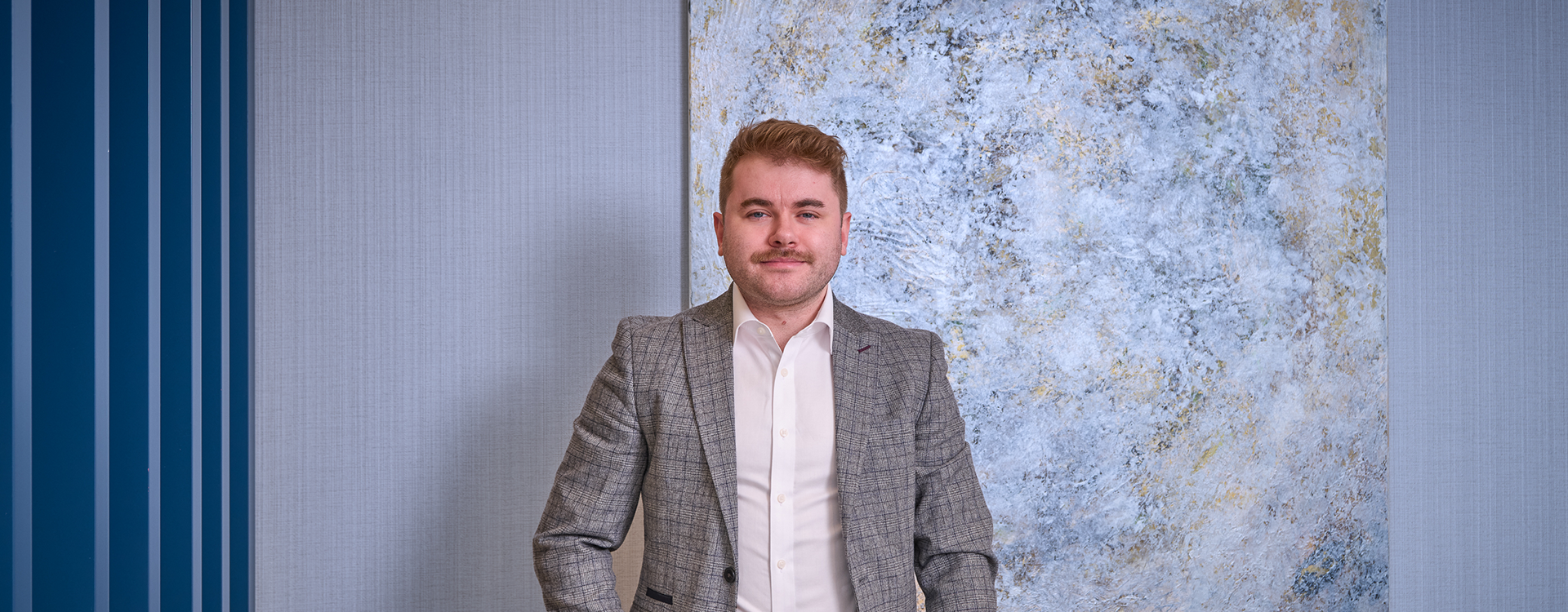
Liam Hurran is a trainee solicitor at Kingsley Napley and is currently in his second seat in the Private Client teamLiam's first seat was with the Family and Divorce team, supporting them with all aspects of financial and private law children work.
Liam joined Kingsley Napley in October 2015 as a paralegal in the Family team. He was promoted to legal assistant and offered a training contract with the firm in 2018.
Join the conversation


